
Machine builder and automation integrator ◆ Evansville, Indiana
International
Automation Solutions.
From the welded frame to the control panel to the software, we design and deliver the entire package: complete machines, robot cells, high speed motion, UL 508A panels, material handling and metal fabrication, built and run off in our own 130,000 square foot facility. Our flagship product, IAS Osprey, adds AI defect inspection to the packaging line you already run.
What we build
Complete machines,
built in house.
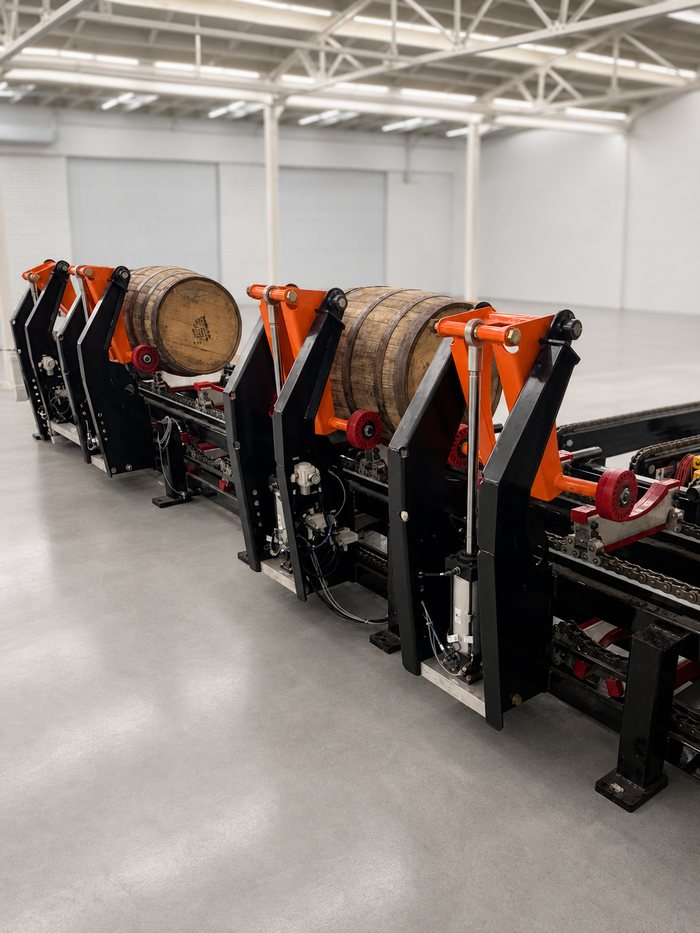
A proof of concept that lives on a laptop is a science project. Whatever the machine is, an inspection system, a robot cell or the barrel handling line in the photo, IAS engineers the mechanics, writes the controls, builds the panel in our own UL 508A shop, fabricates the frame and runs the machine off on our floor before it ships.
Metal fabrication and machining
A full metal shop in house: welding, machining, waterjet cutting and brake forming. We build guarding and fencing, frames, fixtures and complete industrial systems, not just parts for our own machines.
Robotic integration
Complete cells. Robot, end of arm tooling, guarding, safety circuits and commissioning, for tending, pick and place, palletizing and vision guided motion.
UL 508A panels
Industrial control panels designed, wired and labeled in our own listed shop, from a single enclosure retrofit to full line control.
Material handling
Conveyors, transfers, diverts, accumulation and reject handling, designed around the product and wired into line controls.
Motion engineering
Servo systems, electronic camming and gearing, registration and coordinated multi axis control for high speed lines.
Vision and AI
Deep learning inspection engineered onto the line you already run: optics, lighting, GPU inference, reject handling and the operator screen. The flagship, in detail, below.
The flagship product
IAS Osprey, the flagship
inspection system.
The eye gets tired. The camera does not. Your inspectors can catch these defects, just not at full line rate, for a full shift, without drifting, with no sick days and no call ins. IAS Osprey photographs every product, grades it with AI trained on your own defects, and rejects bad product automatically at line speed, on the line you already run.
The capture and verdict chain, proven at production rate on a customer's pouch line: 80,000+ images with no missed triggers and no dropped verdicts. See the measured results.
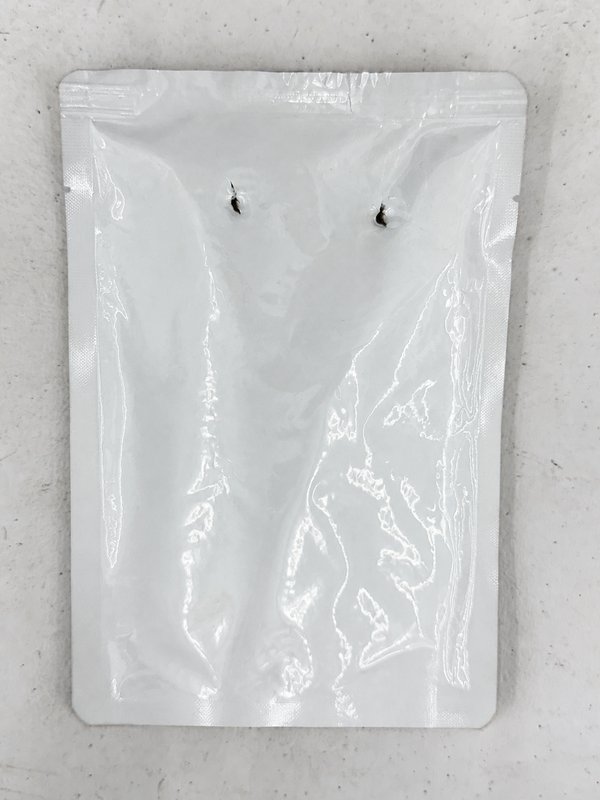
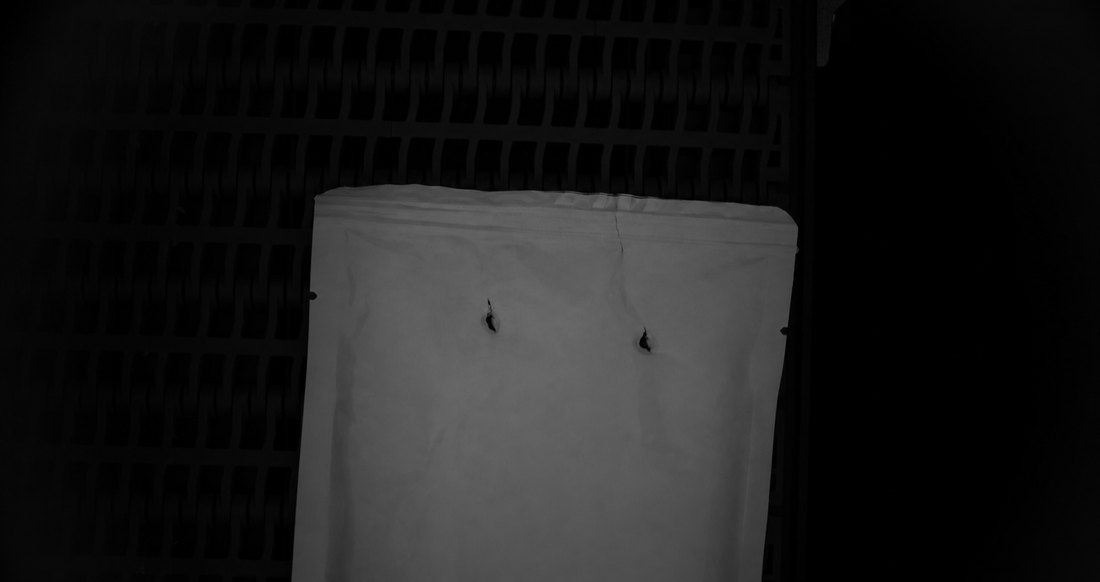
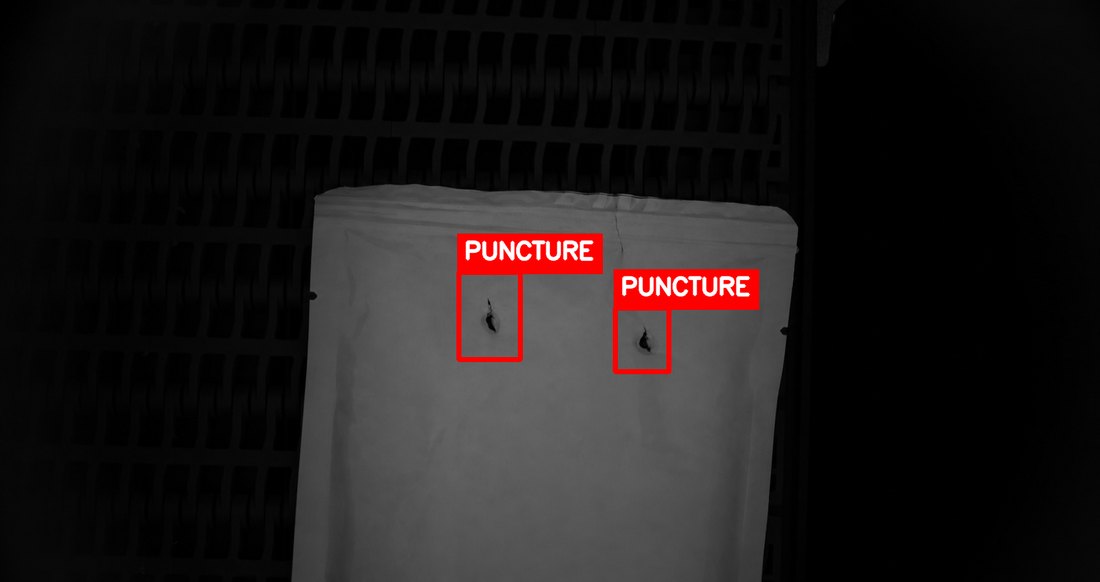
Both frames show the same physical defect sample: one on the bench as an operator sees it, one through the inline inspection camera.
The inspections people can do,
and machines usually cannot.
Rules based machine vision measures what you tell it to measure. It does well on a printed date code and badly on a defect that hides in glare, texture and normal product variation. That is the gap deep learning closes.
Seal and closure integrity
Heat seal faults, seal position and alignment, sonic seal defects, folds and contamination trapped in the seal. The faults that turn into a leak after the pouch is filled.
Film and surface damage
Punctures, tears, edge cuts, abrasion and delamination. Low contrast damage that an operator finds by feel and a fixed threshold never finds at all.
Label, print and assembly
Misapplied and skewed labels, print faults, missing components, wrong orientation and mixed product. Anything where correct and incorrect look almost the same.
Candidate inspection types; nine of these classes are demonstrated from physical samples on the Osprey page. The classes are not fixed. Models are trained on the defects your line actually produces, from your samples, not a stock dataset.
Before anyone quotes a machine
What defects cost you in a year.
Set the five numbers below against your line and get the annual figure. That is the number any proposal has to beat, and the same data points at the problems upstream.
Scrap and rework use your cost per affected unit. Set that to what a bad unit actually costs you: one escaped reject can send an entire gaylord of product back. Inspection labor is calculated at $32 per hour fully burdened, across 50 production weeks.
This is an exposure figure, not a savings promise. No detection rate is assumed anywhere in it. What a system would actually catch on your line is measured during validation and quoted then, never before.
Where we work
Industries we serve.
Food packaging lines have the clearest case: high rate, thin margins, real consequences for an escape. The same engineering and the same shop serve manufacturers well beyond packaging.
Food manufacturing and co-packing
Pouches, cartons and filled containers at rate, with sanitary construction and washdown rated enclosures where the area calls for it.
Distilling and cooperage
Barrel handling and conveyance, combustion and char process control, hazardous area rated controls, and build levels from workhorse to visitor-ready.
Municipal water and wastewater
Process control retrofits, pump and drive lineups, SCADA and panel work to plant standards.
Manufacturing and OEMs
Metal and component manufacturing, plastics and extrusion, and process equipment OEMs who need controls and build capacity behind their name.
Process
How a project runs.
An IAS Osprey project starts with a technical answer, not a machine quote: five phases, each separately scoped and approved. Machines, panels and retrofits follow a simpler path, scoped and quoted job by job. Not sure where you land? Check your fit in five questions.
- 0
Fit review
Free, 30 to 60 minutes
A straight answer on whether your application is a good fit, and the cheaper alternative if one exists.
- 1
Feasibility
2 to 4 weeks
An image capture station on your shop floor collects data from real product. We then train the AI model to show a proof of concept. Go, conditional go, or a defensible no.
- 2
Validation
8 to 12 weeks
Proven on our line, simulating yours at your required speed, with measured false accept and false reject rates.
- 3
Deployment
Scoped and quoted per project
Engineered, built, installed and accepted against written FAT and SAT criteria.
- 4
Osprey Assist
Per site, per year
Health reviews, model management, retraining as the product changes, and data analytics dashboards.
The next step is free
Start a project review.
A defect, a bottleneck, a machine that does not exist yet, or a panel that needs replacing. Thirty to sixty minutes on a call and we will tell you whether it is worth a study, worth a machine quote, or whether something cheaper solves it. A defensible no is a valid outcome, and it costs you nothing to hear it.
What to have ready
- For inspection: the defect, with representative good and bad samples
- For a machine or panel: what it needs to do, and the rate it needs to run
- What is there today, and how the job is handled now
- What the problem costs in labor, scrap, escapes or downtime
Nothing else. No RFP, no drawings, no budget number.